
Composition
What is in one daily dose: seven groups of substances
Thirteen grams of powder, more than forty active substances. A guide to what you are actually drinking — and why it is put together exactly this way.
1. Vitamins
The complete spectrum from A to K2, fourteen items in all. What matters is not only that they are there, but in what form: vitamin D3 comes from lichen, not from sheep lanolin, so it is vegan. Folate is in the 5-MTHF form, already bioactive. Vitamin K2 is the MK-7 type, which stays in the blood longer than the MK-4 form.
For vitamins, the authorised European claims apply — for example that vitamin C contributes to the normal function of the immune system or that vitamin B12 contributes to the reduction of tiredness and fatigue.
2. Minerals
Magnesium, zinc, copper, selenium, calcium and boron. Magnesium is in the bisglycinate form and selenium as L-selenomethionine — chelated and organic forms that the body usually tolerates better than cheap inorganic salts. Calcium and boron are only in the 40+ and 60+ variants.
3. Microbiome
Four bacterial strains — Lactobacillus plantarum, rhamnosus GG, reuteri and Bifidobacterium lactis HN019 — around ten billion in total per daily dose. Alongside them, prebiotic fibre: inulin from chicory root, acacia fibre and fructo-oligosaccharides. Cultures without fibre have nothing to live on, which is why the two always go together.
4. Plant extracts
Spirulina, spinach, kale, barley grass, bilberry extract, ginseng, passionflower, ashwagandha KSM-66, rhodiola and cocoa extract. The difference between an extract and a dried herb is standardisation: with an extract you know how much active substance a gram really contains.
5. Mushroom extracts
Lion’s mane, reishi and maitake — a different combination in each variant. What is extracted is the fruiting body, not mycelium grown on grain, and that difference shows up both in the price and on the label.
Why we do not write what plants and mushrooms „do“. The European Commission has not yet authorised any health claim for botanical substances — their assessment is on hold. So we can state what is in the formulation and in what amount, but not promise a specific effect. We think that is right: anyone who promises a result from these substances is going beyond what is permitted in the EU.
6. Amino acids
Citicoline, L-tyrosine, L-theanine, creatine, taurine, L-glutamine, L-arginine and betaine. This is where the variants differ most — in 20+ the substances linked to mental performance dominate, from 40+ upwards betaine increases and the stimulating component recedes.
7. Other active substances
Antioxidants and structural substances: astaxanthin, resveratrol, alpha-lipoic acid, coenzyme Q10, curcumin with piperine (piperine improves the absorption of curcumin), glucosamine and hyaluronic acid.
Why powder and not tablets
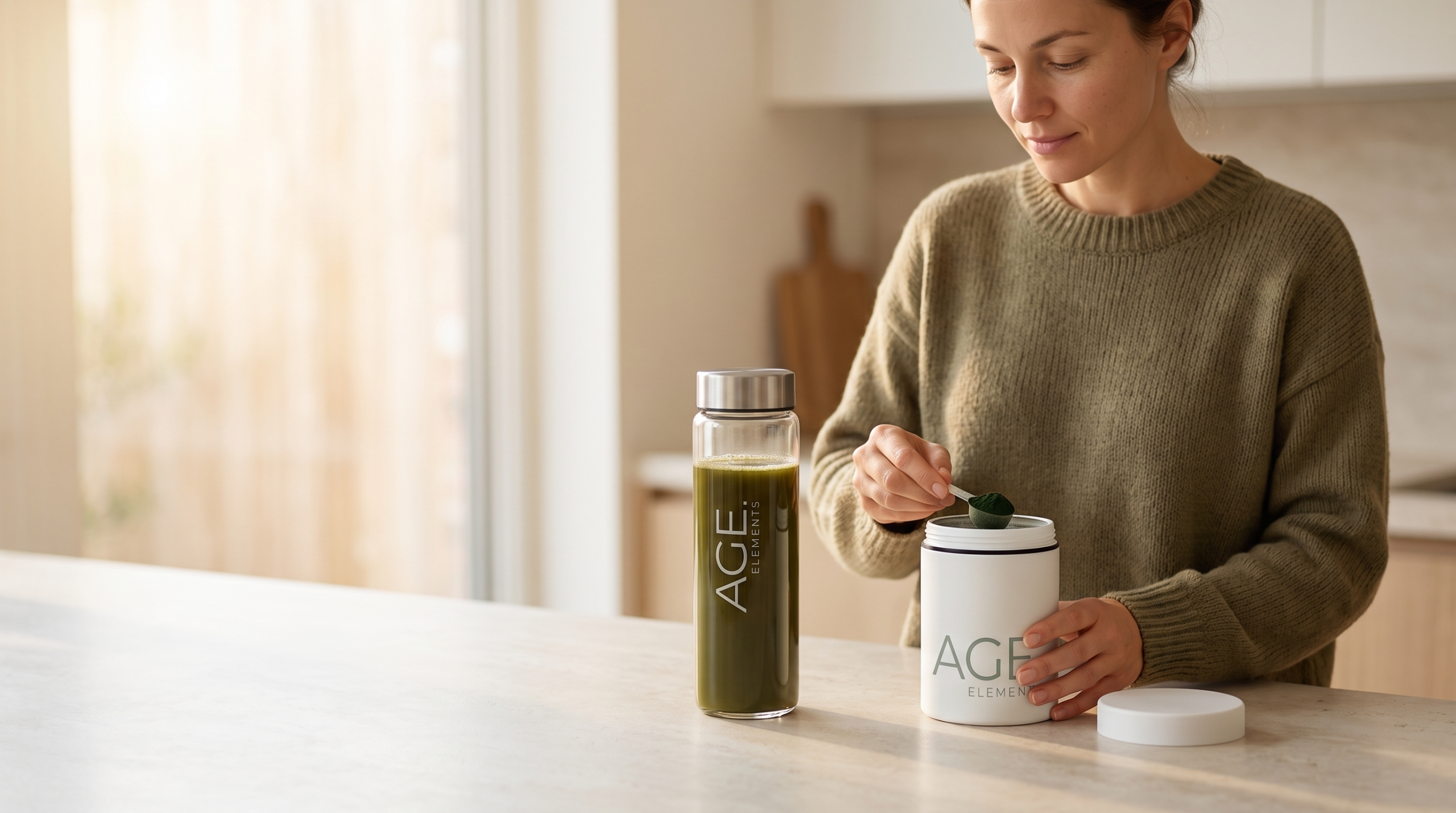
A single capsule holds a fraction of a gram. Thirteen grams of powder hold this whole spectrum, with room left over for the fibre that would never fit into tablets at all. The price you pay is having to stir the dose in — which is about twenty seconds a day.
You will find the complete list of every substance, including amounts and % NRV values, on the page Ingredients. Why the composition changes with age is discussed in the article At twenty, at forty, past sixty.